Average Rent in Melbourne 2026 — Suburb by Suburb Guide
Get suburb rental alerts before your next inspection
Join the list for new rental alerts, suburb medians, and practical renter updates.
Join 2,400+ Victorian renters. Unsubscribe anytime.
title: "Average Rent in Melbourne 2026 — Suburb by Suburb Guide" description: "Complete guide to average rent in Melbourne for 2026. CBD, inner, middle, and outer suburb breakdowns for 1BR, 2BR, and 3BR rentals with trend data." slug: "average-rent-melbourne-2026" date: "2026-03-26" author: "Emma Clarke" category: "rental-guide"
Average Rent in Melbourne 2026 — Suburb by Suburb Guide
Last updated March 2026
Melbourne rents have risen for the fourth consecutive year, with the city-wide median now sitting at $520 per week for all property types. This guide breaks down average rents across every region of Melbourne — CBD, inner suburbs, middle ring, and outer suburbs — with 1BR, 2BR, and 3BR comparisons, three-year trend data, and forecasts for the rest of 2026.
Table of Contents
- Melbourne Rent Overview — 2026 Snapshot
- CBD Rental Prices
- Inner Suburb Rental Prices
- Middle Ring Rental Prices
- Outer Suburb Rental Prices
- Three-Year Rent Trends (2024–2026)
- Rent Predictions for the Rest of 2026
- How to Find the Best Rental Value in Melbourne
- Frequently Asked Questions
- Sources
Melbourne Rent Overview — 2026 Snapshot
Before diving into specific suburbs, it helps to understand where the Melbourne market sits in early 2026. The numbers tell a story of persistent growth tempered by the first signs of a slowdown.
Key Figures at a Glance
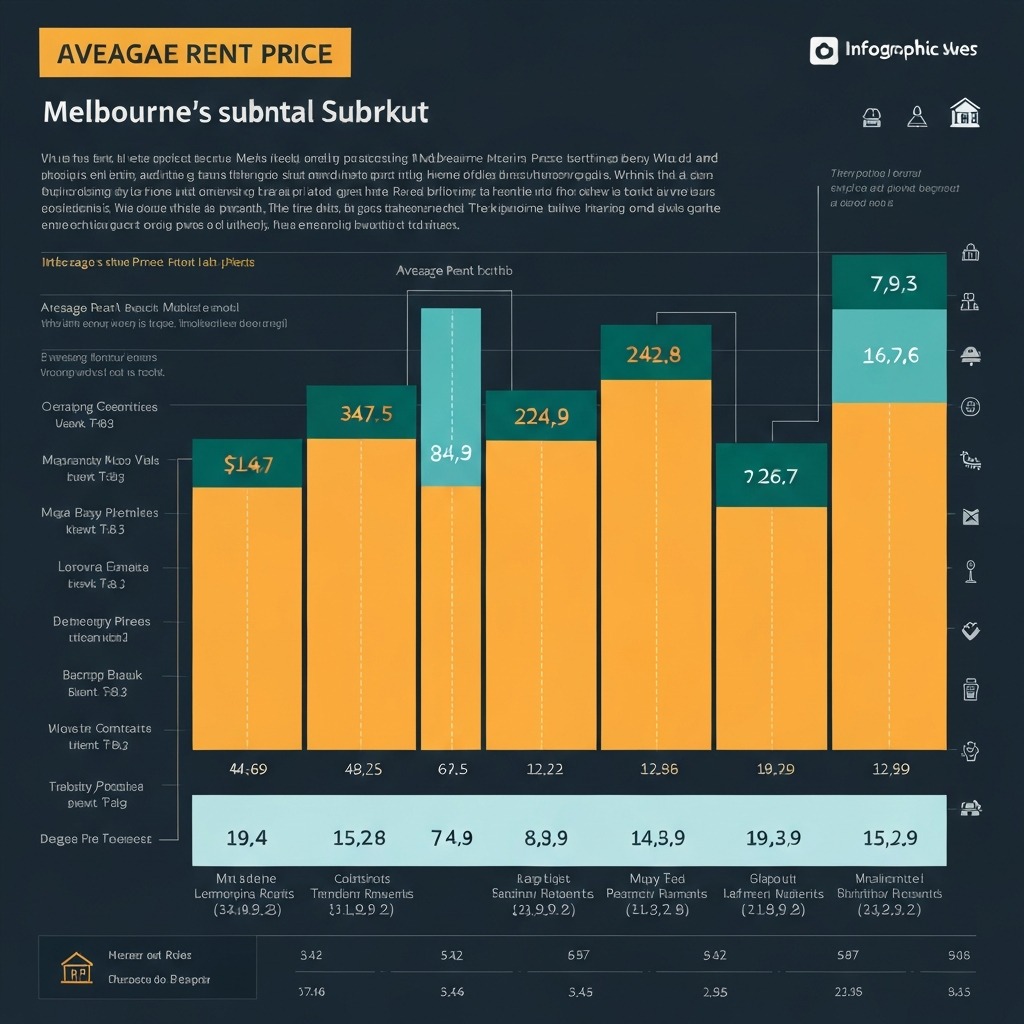
The metropolitan Melbourne median weekly rent reached $520 across all dwelling types in Q4 2025, according to the Department of Families, Fairness and Housing (DFFH) quarterly rental report. This represents a 6.1 per cent increase over the previous year.
Breaking this down by bedroom count across the entire metro area:
| Property Type | Median Weekly Rent (Q4 2025) | Year-on-Year Change | |---------------|------------------------------|---------------------| | 1-bedroom apartment | $420 | +5.0% | | 2-bedroom apartment | $480 | +6.7% | | 3-bedroom house | $550 | +6.8% | | 4-bedroom house | $620 | +5.2% |
These are metro-wide medians. The range between the most expensive and cheapest suburbs spans from well over $700 per week in Toorak to under $350 in Melton.
Vacancy Rates
SQM Research recorded Melbourne's residential vacancy rate at 1.4 per cent in February 2026, up slightly from the historic low of 1.0 per cent in mid-2024. While the market has loosened marginally, it remains well below the 3 per cent threshold that is generally considered balanced between landlords and tenants.
A vacancy rate below 2 per cent means renters still face significant competition for well-priced properties. If you are navigating the current market, our Melbourne rental crisis guide provides practical strategies for dealing with high demand.
How Melbourne Compares Nationally
Melbourne remains more affordable than Sydney, where the metro median reached $620 per week, but is now more expensive than Brisbane ($490), Perth ($510), and Adelaide ($460). The gap between Melbourne and Sydney has narrowed over the past three years as Melbourne's growth rate has outpaced Sydney's.
CBD Rental Prices
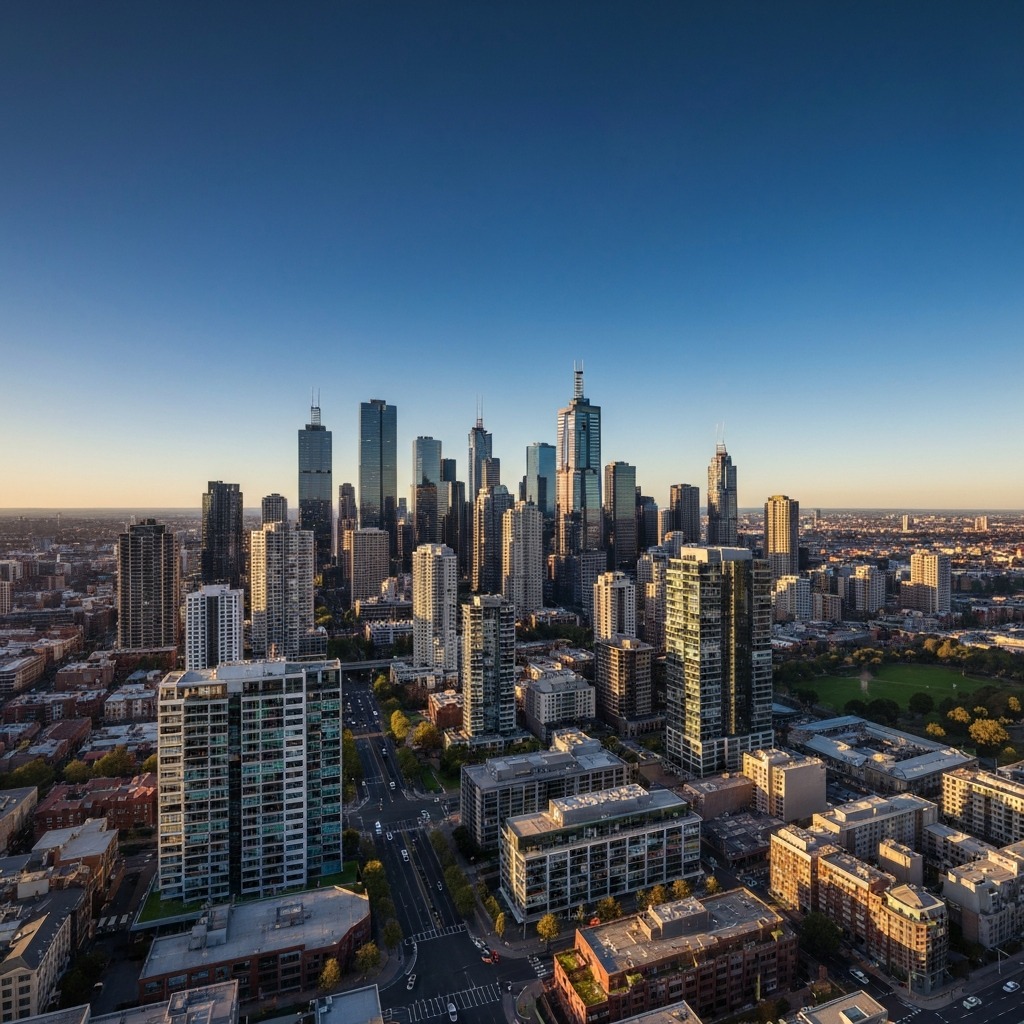
Melbourne's CBD stretches from Flinders Street in the south to Victoria Street in the north, bounded by Spring Street to the east and Spencer Street to the west. It contains the densest concentration of apartment towers in Australia.
1-Bedroom Apartments: $550–$650/week
The median one-bedroom CBD apartment now rents for $595 per week, a figure that has climbed steadily since the post-COVID trough of $350 in early 2022. Studios sit slightly lower at $480 to $530 per week depending on size and building quality.
Premium buildings with concierge, gym, and pool facilities command the upper end of the range. Older towers without modern amenities, particularly those built during the early 2000s apartment boom, tend to sit closer to $550.
2-Bedroom Apartments: $700–$850/week
Two-bedroom CBD apartments rent for a median of $760 per week. This makes them a significant step up from one-bedroom options, though per-person costs drop substantially for sharers.
New developments in Southbank and Docklands have pushed the upper boundary higher, with luxury two-bedroom apartments in buildings like Australia 108 and Melbourne Quarter commanding $900 or more per week.
3-Bedroom Apartments: $950–$1,200/week
Three-bedroom CBD apartments are relatively rare and tend to be premium products. The median sits around $1,050 per week, but the sample size is small enough that individual listings can skew this figure significantly.
Most three-bedroom seekers are better served by looking at inner suburbs, where houses and larger apartments offer more space at lower price points.
CBD Rental Dynamics
The CBD rental market has a distinct seasonal pattern driven by international students. Demand surges in January and February as university semester approaches, then softens slightly in June and July. Renters who can time their search for mid-year often find slightly lower prices and less competition.
The CBD also has the highest rental turnover in Melbourne. The average tenancy length is just 14 months, compared to 22 months across metropolitan Melbourne. This creates a steady churn of available properties, even in a tight market.
Inner Suburb Rental Prices
Melbourne's inner suburbs — roughly those within 5 to 10 kilometres of the CBD — are the most sought-after rental locations in the city. They offer walkability, nightlife, cultural amenities, and short commutes, all at a premium.
Fitzroy — The Creative Quarter
Fitzroy is Melbourne's oldest suburb and arguably its most culturally significant. Brunswick Street and Smith Street provide some of the best bar, restaurant, and live music options in the country.
| Property Type | Median Weekly Rent | |---------------|-------------------| | 1-bedroom apartment | $480 | | 2-bedroom apartment | $620 | | 3-bedroom house | $780 |
Fitzroy rents have been among the most resilient in Melbourne. Even during the COVID downturn, one-bedroom apartments here only dropped to $380 before rebounding sharply. The suburb's character housing stock — Victorian terraces, converted warehouses — limits new supply, keeping upward pressure on rents.
St Kilda — Bayside Living
St Kilda offers something rare in Melbourne's inner suburbs: a beach. The foreshore, Luna Park, and the Esplanade market create a distinct seaside village atmosphere, while Acland Street and Fitzroy Street provide ample dining and entertainment.
| Property Type | Median Weekly Rent | |---------------|-------------------| | 1-bedroom apartment | $450 | | 2-bedroom apartment | $590 | | 3-bedroom house | $750 |
Interestingly, St Kilda is slightly cheaper than Fitzroy for apartments. This reflects the high proportion of older apartment blocks, particularly the Art Deco buildings along the Esplanade and surrounding streets. These offer character but often lack modern amenities like air conditioning or dishwashers.
South Yarra — Upmarket Dining and Retail
South Yarra centres on Chapel Street and Toorak Road, two of Melbourne's most prominent retail and dining strips. The suburb blends heritage homes with modern apartment developments, particularly along the Yarra River corridor.
| Property Type | Median Weekly Rent | |---------------|-------------------| | 1-bedroom apartment | $500 | | 2-bedroom apartment | $650 | | 3-bedroom house | $850 |
South Yarra is consistently one of the most expensive inner suburbs for rent. Its proximity to the Botanic Gardens, top private schools, and the Prahran Market makes it popular with professionals and young families willing to pay a premium.
Richmond — Sport and Culture
Richmond sits between the CBD and the eastern suburbs, straddling the Yarra River. It is home to the MCG precinct, Bridge Road shopping strip, and Victoria Street's Vietnamese restaurant row.
| Property Type | Median Weekly Rent | |---------------|-------------------| | 1-bedroom apartment | $460 | | 2-bedroom apartment | $600 | | 3-bedroom house | $720 |
Richmond offers some of the best value among Melbourne's inner suburbs. The suburb has a broad mix of housing types, from converted factories to modern apartments to classic Victorian terraces. For a detailed look at this suburb, see our Richmond rentals suburb guide.
Carlton — University and Lygon Street
Carlton is defined by two things: the University of Melbourne and Lygon Street. The suburb has a distinctly academic and European feel, with Italian restaurants, independent bookshops, and leafy residential streets.
| Property Type | Median Weekly Rent | |---------------|-------------------| | 1-bedroom apartment | $440 | | 2-bedroom apartment | $580 | | 3-bedroom house | $730 |
Carlton's rental market is heavily influenced by the university calendar. Demand peaks in February and March, while mid-year can offer better opportunities. The suburb's rent growth has been steady rather than dramatic, averaging about 5 per cent annually over the past three years.
Brunswick — The New Inner Suburb
Brunswick has evolved from a gritty, industrial working-class suburb into one of Melbourne's trendiest postcodes. Sydney Road is a kilometre-long stretch of Middle Eastern bakeries, vintage shops, live music venues, and craft breweries.
| Property Type | Median Weekly Rent | |---------------|-------------------| | 1-bedroom apartment | $430 | | 2-bedroom apartment | $560 | | 3-bedroom house | $700 |
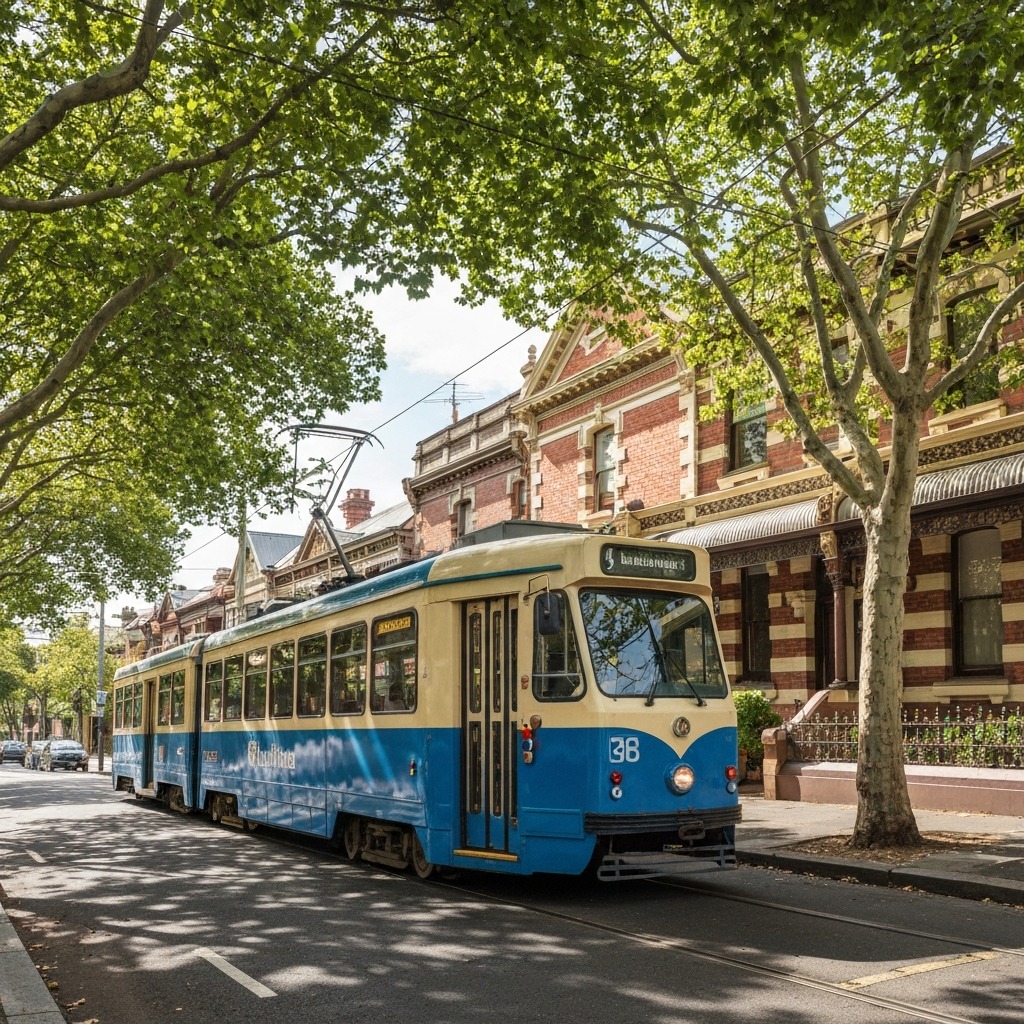
Brunswick remains slightly more affordable than suburbs like Fitzroy and South Yarra, though the gap is closing. The Route 19 tram along Sydney Road provides frequent service to the CBD in about 20 minutes.
Middle Ring Rental Prices
The middle ring — suburbs 10 to 20 kilometres from the CBD — represents the sweet spot for many Melbourne renters. Prices are notably lower than the inner suburbs, while commute times remain manageable and local amenities are solid.
Box Hill — The Eastern Hub
Box Hill has transformed into a major activity centre, driven in part by significant investment from Melbourne's Chinese-Australian community. The suburb now has a skyline, with several apartment towers around the station precinct.
| Property Type | Median Weekly Rent | |---------------|-------------------| | 1-bedroom apartment | $400 | | 2-bedroom apartment | $510 | | 3-bedroom house | $580 |
Box Hill station is a major interchange connecting the Belgrave/Lilydale train lines with multiple bus routes. The CBD commute is about 25 minutes by train. The suburb's food scene, centred on Market Street and the Box Hill Central mall, is exceptional.
Moonee Ponds — Northwest Charm
Moonee Ponds sits on the Craigieburn train line, about 8 kilometres northwest of the CBD. It has a well-established character, with wide tree-lined streets, Art Deco architecture, and a traditional shopping strip centred on Puckle Street.
| Property Type | Median Weekly Rent | |---------------|-------------------| | 1-bedroom apartment | $420 | | 2-bedroom apartment | $540 | | 3-bedroom house | $620 |
Moonee Ponds has seen significant gentrification over the past decade. New apartment developments around the station precinct have added supply but also pushed overall price expectations upward. The tram along Mount Alexander Road provides an alternative to the train.
Preston — Northern Value
Preston sits on the South Morang line, about 10 kilometres north of the CBD. Once one of Melbourne's most affordable inner-northern suburbs, it has gentrified considerably but still offers better value than Fitzroy, Northcote, and Thornbury to its south.
| Property Type | Median Weekly Rent | |---------------|-------------------| | 1-bedroom apartment | $380 | | 2-bedroom apartment | $490 | | 3-bedroom house | $570 |
High Street Preston has emerged as a dining destination in its own right, with a diverse mix of Greek, Vietnamese, Italian, and Middle Eastern restaurants. The Preston Market remains one of Melbourne's best fresh food markets.
Footscray — Western Gateway
Footscray, just 5 kilometres west of the CBD, has long been one of Melbourne's most culturally diverse suburbs. The Footscray Market and Little Saigon precinct draw food lovers from across the city.
| Property Type | Median Weekly Rent | |---------------|-------------------| | 1-bedroom apartment | $390 | | 2-bedroom apartment | $500 | | 3-bedroom house | $590 |
Footscray's location — closer to the CBD than most "inner suburbs" on the eastern side — makes it outstanding value. The station is a major interchange on the V/Line and Metro networks, with trains to Southern Cross in under 10 minutes.
Heidelberg — Artist's Retreat
Heidelberg, about 12 kilometres northeast of the CBD, is known as the birthplace of Australian Impressionism. The Heidelberg School artists painted the surrounding landscapes in the 1880s, and the suburb retains a leafy, artistic character.
| Property Type | Median Weekly Rent | |---------------|-------------------| | 1-bedroom apartment | $390 | | 2-bedroom apartment | $500 | | 3-bedroom house | $600 |
Austin Health and the Warringal Private Hospital make Heidelberg a significant employment hub for the health sector. The suburb is served by the Hurstbridge line, with trains to the city in about 25 minutes.
Doncaster — Hilltop Living
Doncaster sits 15 kilometres east of the CBD and is notable for being one of Melbourne's largest suburbs without a train station. It relies on the DART bus service along the Eastern Freeway for public transport connections.
| Property Type | Median Weekly Rent | |---------------|-------------------| | 1-bedroom apartment | $420 | | 2-bedroom apartment | $530 | | 3-bedroom house | $610 |
Westfield Doncaster is one of Melbourne's premium shopping centres, and the suburb has a well-established Chinese-Australian community with excellent Asian dining options. For more on renting in this area, read our Doncaster rentals suburb guide.
Outer Suburb Rental Prices
Melbourne's outer suburbs, broadly those 20 kilometres or more from the CBD, offer the most affordable rents in the metropolitan area. Growth corridors in the west, north, and south-east have seen massive population increases and corresponding infrastructure investment.
Werribee — Western Anchor
Werribee has grown from a small country town into a city of over 100,000 people. It is the de facto capital of Melbourne's outer west and has a level of self-sufficiency that most outer suburbs cannot match.
| Property Type | Median Weekly Rent | |---------------|-------------------| | 1-bedroom apartment | $320 | | 2-bedroom apartment | $360 | | 3-bedroom house | $430 |
The gap between Werribee and the inner suburbs is striking. A three-bedroom house here costs less than a one-bedroom apartment in Fitzroy. For renters whose work does not require a daily CBD commute, the value proposition is hard to ignore.
Cranbourne — Southern Growth Corridor
Cranbourne anchors Melbourne's south-eastern growth corridor. The suburb has expanded rapidly, with new housing estates extending toward Clyde and Botanic Ridge.
| Property Type | Median Weekly Rent | |---------------|-------------------| | 1-bedroom apartment | $310 | | 2-bedroom apartment | $365 | | 3-bedroom house | $420 |
The recently completed Cranbourne line duplication has improved train frequency and reliability. Casey Council has also invested in new community facilities, including the Casey RACE aquatic centre and expansions to the Cranbourne library network.
Craigieburn — Northern Growth Hub
Craigieburn represents Melbourne's northern frontier. The suburb has added thousands of new homes over the past five years and now has the amenities to match, including a major shopping centre, leisure centre, and multiple schools.
| Property Type | Median Weekly Rent | |---------------|-------------------| | 1-bedroom apartment | $310 | | 2-bedroom apartment | $370 | | 3-bedroom house | $440 |
Craigieburn's rents have grown more slowly than the Melbourne average, rising about 3 per cent in the past year. This is largely due to the steady supply of new housing being released in surrounding estates.
Point Cook — Planned Community
Point Cook is one of Melbourne's most planned outer suburbs, with a series of master-planned estates that include integrated parks, walking trails, and community centres.
| Property Type | Median Weekly Rent | |---------------|-------------------| | 1-bedroom apartment | $340 | | 2-bedroom apartment | $400 | | 3-bedroom house | $470 |
Point Cook does not have its own train station, which is a significant drawback. Residents rely on buses to Williams Landing station or drive to the freeway. Despite this, the suburb remains popular with families attracted to its newer housing stock and community feel.
Caroline Springs — Western Middle Ground
Caroline Springs sits between the established western suburbs and the outer fringe. It is a master-planned community built primarily in the 2000s and 2010s, with a lake-centred town centre and excellent sports facilities.
| Property Type | Median Weekly Rent | |---------------|-------------------| | 1-bedroom apartment | $350 | | 2-bedroom apartment | $410 | | 3-bedroom house | $480 |
Caroline Springs station, which opened in 2017, connects the suburb to the CBD via the Ballarat/Melton line. The train takes about 30 minutes to Southern Cross, making it one of the better-connected outer suburbs.
For those looking specifically at the cheapest options among outer suburbs, our cheapest suburbs to rent in Melbourne 2026 guide goes into even more detail.
Three-Year Rent Trends (2024–2026)
Understanding where rents have been helps predict where they are going. The past three years have seen a dramatic reshaping of Melbourne's rental landscape.
2024 — The Peak of the Crisis
In 2024, Melbourne experienced its tightest rental market on record. Vacancy rates dropped below 1 per cent in several inner suburbs, and renters reported attending inspections with 50 or more other applicants. Key figures from Q4 2024:
- Metro median (all dwellings): $470/week
- 1-bedroom apartment median: $385/week
- 2-bedroom apartment median: $440/week
- 3-bedroom house median: $500/week
Year-on-year growth hit 10.2 per cent, the highest since records began in 2000.
2025 — Growth Continues, But Slows
The pace of rent increases moderated in 2025, though prices continued to rise. New apartment completions in the CBD and inner suburbs added much-needed supply, while international student numbers stabilised after the post-COVID surge. Q4 2025 figures:
- Metro median (all dwellings): $520/week
- 1-bedroom apartment median: $420/week
- 2-bedroom apartment median: $480/week
- 3-bedroom house median: $550/week
Year-on-year growth slowed to 6.1 per cent, a notable deceleration from 2024 but still well above the long-term average of 3 to 4 per cent.
2026 (Year to Date) — Early Signs of Stabilisation
Data from the first two months of 2026 suggests further deceleration. Domain's February 2026 rental report recorded quarterly growth of just 1.2 per cent, the slowest since mid-2021. Several factors are contributing:
- New apartment supply is beginning to catch up with demand in key inner-city locations
- The federal government's migration cap, introduced in mid-2025, is reducing the rate of new arrivals
- Interest rate cuts in late 2025 encouraged some renters to transition to home ownership, easing demand
Regional Variation in Growth
Not all suburbs have followed the same trajectory. The table below shows how growth rates have varied by region:
| Region | 2024 Growth | 2025 Growth | 2026 YTD (Annualised) | |--------|-------------|-------------|----------------------| | CBD | +12.5% | +7.8% | +3.2% | | Inner suburbs | +11.0% | +6.5% | +4.0% | | Middle ring | +9.5% | +5.8% | +3.5% | | Outer suburbs | +7.2% | +4.5% | +2.8% |
The pattern is clear: the further from the CBD, the slower the rent growth. This reflects both the greater supply of new housing in outer areas and the fact that outer rents were already at the limit of what lower-income renters could absorb.
Rent Predictions for the Rest of 2026
Predicting rents with certainty is impossible, but several indicators point toward a more moderate year ahead.
Supply Pipeline
The Victorian Building Authority reports that residential building approvals in Greater Melbourne reached 42,000 in 2025, the highest in four years. A significant share of these are apartments and townhouses in inner and middle-ring locations.
While there is always a lag between approval and completion, the pipeline suggests that new supply will continue entering the market throughout 2026 and into 2027. This should help contain rent growth, particularly in areas with high development activity.
Migration Trends
Net overseas migration to Victoria is projected to be around 85,000 for the 2025-26 financial year, down from the peak of 110,000 in 2023-24. This moderation in population growth is one of the most significant factors likely to ease rental demand.
However, Melbourne also continues to attract interstate migrants, particularly from Sydney, drawn by relatively lower housing costs. This partially offsets the reduction in overseas arrivals.
Interest Rates and Ownership Transition
The Reserve Bank of Australia cut the cash rate twice in late 2025, bringing it to 3.6 per cent. Further cuts are widely expected in 2026. Lower interest rates make home ownership more accessible, potentially converting some rental demand into purchase demand.
SQM Research forecasts that Melbourne rents will grow by 3 to 5 per cent over the full 2026 calendar year, down from 6.1 per cent in 2025. Domain's forecast is slightly more optimistic, predicting 2 to 4 per cent growth.
Our Assessment
We expect Melbourne's metro median rent to reach approximately $540 to $550 per week by Q4 2026, representing growth of 4 to 6 per cent over the year. Inner suburbs will likely see slightly higher growth due to limited new supply in character areas, while outer suburbs will continue to see the slowest increases thanks to ongoing new housing development.
For renters, this means the worst of the crisis is likely behind us. But affordability remains strained, and securing a well-priced property still requires preparation and persistence. Our guide on how to apply for a rental in Victoria will help you put your best foot forward.
How to Find the Best Rental Value in Melbourne
Understanding average rents is useful, but finding a property below the median requires strategy. Here are practical approaches for 2026.

Target Suburbs at the Edge of Gentrification
The best value in Melbourne's rental market often sits in suburbs that are one step behind the gentrification wave. When Northcote became expensive, renters moved to Preston. As Preston rises, Reservoir and Thomastown offer similar proximity at lower prices.
Look for suburbs with a new train station, a recently opened cafe or two, and a mix of older housing stock alongside new developments. These are the suburbs where rents have not yet caught up with improving amenity.
Consider the Middle Ring Seriously
Many renters default to either the inner suburbs (for lifestyle) or the outer suburbs (for price). The middle ring often gets overlooked, yet suburbs like Box Hill, Preston, Footscray, and Moonee Ponds offer a compelling balance of both.
A one-bedroom apartment in Preston at $380 per week, for example, is $70 cheaper than a comparable unit in Fitzroy, with a commute that is only 10 minutes longer.
Know Your Rights to Negotiate
Under the Victorian Residential Tenancies Act, there is nothing preventing you from offering below the advertised rent. In a softening market, landlords may accept a lower figure rather than leave a property vacant.
This works best for properties that have been listed for more than two weeks without finding a tenant. Our renter rights in Victoria guide covers your negotiation rights in detail.
Think About Pet-Friendly Properties
Since Victoria's 2020 rental law reforms, landlords can only refuse pets with a VCAT order. Many landlords have since embraced pet-friendly renting, but properties explicitly advertised as pet-friendly still command a slight premium.
If you have a pet, knowing your rights can save you money. Rather than paying extra for a "pet-friendly" listing, you can apply for any property and exercise your legal right to request pet approval. See our pets in rental properties Victoria guide for the full process.
Use Bond Strategically
Understanding your bond obligations can help with cash flow during a move. In Victoria, bond is capped at one month's rent for properties under $900 per week. If you are moving from a cheaper property to a more expensive one, budget carefully for the difference.
Our bond in Victoria guide explains everything from payment to refund claims.
Frequently Asked Questions
What is the average rent in Melbourne in 2026?
The average (median) rent across all dwelling types in metropolitan Melbourne is $520 per week as of Q4 2025. For one-bedroom apartments specifically, the metro median is $420 per week. For two-bedroom apartments, it is $480 per week. For three-bedroom houses, it is $550 per week.
Which Melbourne suburb has the cheapest rent?
Melton has the cheapest median rent in Greater Melbourne at $340 per week for a two-bedroom property. Among suburbs with reliable train access, Broadmeadows ($350) and Dandenong ($355) offer the best combination of affordability and connectivity. See our full guide to the cheapest suburbs to rent in Melbourne 2026.
Are Melbourne rents still going up in 2026?
Yes, but at a slower rate than in 2024 and 2025. Early 2026 data shows quarterly growth of 1.2 per cent, compared to 2.5 per cent in the same period of 2025. Forecasters expect full-year 2026 growth of 3 to 5 per cent, well below the 6.1 per cent recorded in 2025 and the 10.2 per cent peak of 2024.
How much should I budget for rent in Melbourne?
The standard benchmark is no more than 30 per cent of your gross income. On a salary of $70,000, that means a maximum of about $400 per week. On $90,000, you can stretch to about $520. In the inner suburbs, meeting this benchmark on a single income below $80,000 is difficult; the middle ring and outer suburbs offer more options.
Is it cheaper to rent a house or an apartment in Melbourne?
On a per-bedroom basis, houses in the middle ring and outer suburbs often offer better value than apartments. A three-bedroom house in Werribee ($430/week) works out to roughly $143 per bedroom, while a one-bedroom apartment in the CBD ($595/week) is $595 per bedroom. However, apartments in the inner suburbs tend to have lower utility costs and no garden maintenance.
Sources
- Department of Families, Fairness and Housing (DFFH), Rental Report — December Quarter 2025, Victorian Government.
- Domain Group, Melbourne Rental Market Report Q4 2025, Domain Holdings Australia.
- Domain Group, February 2026 Rental Update, Domain Holdings Australia.
- SQM Research, Residential Vacancy Rates — Melbourne, accessed March 2026.
- SQM Research, Housing Boom and Bust Report 2026, Louis Christopher, January 2026.
- Australian Bureau of Statistics, Average Weekly Earnings, Australia, Cat. No. 6302.0, November 2025.
- Reserve Bank of Australia, Statement on Monetary Policy, February 2026.
- Victorian Building Authority, Building Permit Activity Report 2025, accessed March 2026.
About the Author
Emma Clarke is a Victorian rental market specialist with over eight years of experience covering Melbourne's property landscape. She has written extensively on tenant rights, rental affordability, and suburb-level market analysis for audiences across Victoria. Emma is based in Melbourne and inspects rental properties across the metropolitan area every week to keep her advice grounded in real-world conditions.
About the Author
Maya Chen, Content Writer, RentBuzz — Maya is a rental market researcher covering Australian property trends, suburb guides, and renter rights. She has analysed rental data across Melbourne, Sydney, Brisbane, and Perth.
Keep your shortlist moving
Get suburb-specific rental updates once you have narrowed your target areas.
FAQ
Get RentBuzz's weekly market update
Suburb medians, sample listings, and strategy notes for Victorian renters.
About the author
RentBuzz Editorial Team writes practical Victoria-first rental guides focused on suburb pricing, application readiness, and renter decision-making.
Want more Victorian rental advice?
Join our footer list for new guides, calculators, and suburb pricing movement.